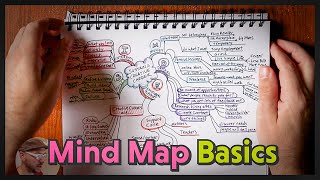
Understanding the Cause and Effect Thinking Map
A Cause and Effect Thinking Map is a visual tool used to organize thoughts and analyze the relationship between events. In its simplest form, it helps learners identify why something happened (the cause) and what happened as a result (the effect). By mapping these connections, students and professionals can move beyond simple memorization and develop deeper critical thinking skills.
What is a Cause and Effect Thinking Map?
At its core, this thinking map is a graphic organizer designed to illustrate the causal link between an event and its consequences. While many people think of cause and effect as a linear progression, real-world scenarios are often complex. A single cause can lead to multiple effects, and a single effect can be the result of several converging causes.
Using a visual map allows the brain to process information spatially, making it easier to spot gaps in logic or identify the primary driver of a specific outcome. This method is widely used in science, history, literature, and business analysis.
Learn How to Create a Cause and Effect Thinking Map
Creating a map is a straightforward process that encourages structured thinking. Whether you are using a digital tool or a whiteboard, follow these steps to build an effective map:
- Identify the Main Event: Start by placing the central event or outcome in the middle of your page. This is your primary "Effect."
- Brainstorm the Causes: Ask yourself, "Why did this happen?" List all the factors that contributed to the event.
- Draw the Connections: Use arrows to connect each cause to the central event. The arrow should point from the cause toward the effect.
- Analyze Secondary Effects: Some causes may trigger their own subsequent effects. You can extend your map by drawing further arrows from the main event to new resulting outcomes.
- Review and Refine: Once the map is complete, check your work. Ensure that every connection is logical and supported by evidence.
Elementary-Level Overview and Examples
For younger students, cause and effect thinking is a fundamental building block of literacy and scientific inquiry. To introduce the concept to children, it is helpful to use relatable, everyday examples.
Example 1: The Weather
- Cause: It rains heavily for three days.
- Effect: The backyard develops large puddles, and the soccer game is canceled.
Example 2: Personal Habits
- Cause: A student forgets to set their alarm clock.
- Effect: They wake up late and miss the school bus.
By using these simple scenarios, students learn to identify the trigger (cause) and the result (effect), which prepares them for more complex analysis in higher grades.
The Role of Thinking Maps in Education
Thinking maps are part of a broader pedagogical approach to cognitive development. Rather than just recording information, these maps encourage active thinking. When students use a Cause and Effect map, they are practicing analytical thinking—the ability to break down a complex problem into smaller, manageable parts to understand how they relate to one another.
This process is essential for:
- Reading Comprehension: Understanding character motivations and plot developments in a story.
- Scientific Method: Hypothesizing how changing one variable affects the outcome of an experiment.
- Historical Analysis: Evaluating the social and political triggers that led to major world events.
Resources for Further Learning
For educators and institutions looking to integrate these tools into their curriculum, professional resources are available to provide structured guidance and templates. Comprehensive materials and training on thinking maps can be found through specialized providers such as ITC Publications (available at http://www.itcpublications.com.au) or ITC ThinkDrive (available at http://it