How to Create an Effective Capitalization Anchor Chart
A capitalization anchor chart is an essential visual tool used in classrooms to help students master the rules of written English. By transforming abstract grammar rules into a permanent, visible reference, teachers can reduce repetitive questioning and empower students to self-correct their writing. Whether you are teaching elementary basics or advanced grammar, a well-structured chart serves as a roadmap for proper mechanics.
What is a Capitalization Anchor Chart?
In educational settings, an anchor chart is a poster created during a lesson that "anchors" the learning. For capitalization, this means listing the specific scenarios where an uppercase letter is required. Instead of relying solely on memory, students can glance at the wall to determine if a word—such as a proper noun or the start of a sentence—needs a capital letter.
Basic Rules for Your Anchor Chart
When designing your chart, start with the foundational rules. Most students begin by learning the most frequent patterns of capitalization. To make the chart user-friendly, use a mnemonic device like MINTS (Months, the pronoun I, Names, Titles, and Start of sentences).
Ensure your chart includes these core guidelines:
- The First Word of a Sentence: Always capitalize the first letter of every new sentence.
- The Pronoun "I": Regardless of where it appears in a sentence, the word "I" is always capitalized.
- Proper Nouns: This includes specific names of people, pets, and places (e.g., Sarah, Buddy, Paris).
- Calendar Items: Capitalize days of the week and months of the year.
- Titles: Capitalize titles of books, movies, and songs, as well as professional titles when they precede a name (e.g., Principal Skinner).
Advanced Grammar Considerations
As students progress, your anchor chart can evolve to include more complex rules. Advanced grammar often involves nuances that vary depending on the style guide being used. For instance, APA has guidance on specific capitalization patterns for headings and references that differ from standard creative writing.
Advanced additions to your chart might include:
- Geographic Regions: Distinguishing between "the south" (a direction) and "the South" (a specific region).
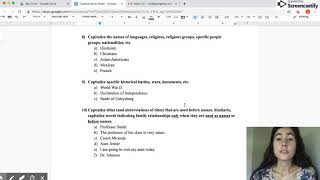
- Nationalities and Languages: Ensuring that words like English, Spanish, or Japanese are always capitalized.
- Sentence-Style vs. Title-Style: It is helpful to explain the difference between sentence-style capitalization (where only the first word and proper nouns are capitalized) and title-style capitalization (where all major words are capitalized).
Tips for Designing a High-Impact Chart
A capitalization anchor chart is only effective if students actually use it. To maximize its utility, consider the following design strategies:
- Use Color Coding: Use one color for the rule and another for the example. For example, write "Proper Nouns" in blue and "New York City" in red.
- Include Non-Examples: To prevent common mistakes, show what not to capitalize. For example, show that "seasons" (spring, summer, autumn, winter) generally remain lowercase.
- Interactive Elements: Leave a section of the chart blank for "Student Discoveries." When a student finds a tricky word in a book, allow them to add it to the chart.
- Keep it Concise: Avoid overcrowding the poster. Use bullet points and short phrases rather than long paragraphs.
Integrating Multimedia Resources
While the physical chart is the primary reference, integrating digital media can reinforce the lesson. Many educators supplement their charts with instructional videos. For example, a video that briefly reviews 10 basic rules of capitalization can provide the auditory and visual reinforcement some students need before they begin using the chart independently.