Understanding the Blank Diagram of a Plant Cell
For students of biology, particularly those in Class 9 or those preparing for IGCSE exams, mastering the blank diagram of a plant cell is a fundamental step in understanding cellular biology. One type of eukaryotic cells is the plant cell, characterized by its rigid structure and ability to produce its own energy through photosynthesis.
A blank diagram serves as an essential educational tool. Rather than simply looking at a labeled image, attempting to label a blank diagram forces the learner to recall the position and function of each organelle, reinforcing the connection between the cell's structure and its biological role.
What is a Plant Cell?
By definition, a plant cell is a eukaryotic cell that contains a membrane-bound nucleus and specialized organelles. Unlike animal cells, plant cells possess a few unique features that allow them to maintain a fixed shape and survive in varied environmental conditions. These include a rigid cell wall, a large central vacuole, and chloroplasts for photosynthesis.
Key Components to Include in a Plant Cell Drawing Diagram
When working with a plant cell drawing diagram, it is important to identify the primary organelles. If you are practicing for an exam, ensure you can accurately place and label the following:
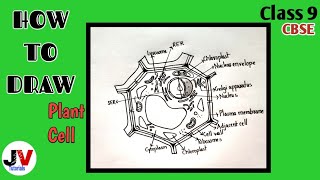
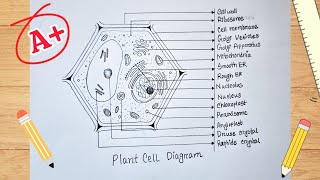
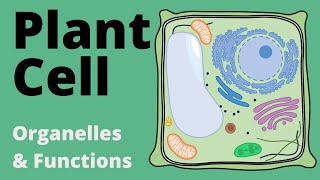
- Cell Wall: The outermost layer made of cellulose that provides structural support and protection.
- Cell Membrane: The semi-permeable layer inside the cell wall that regulates what enters and exits the cell.
- Nucleus: The control center of the cell containing genetic material (DNA).
- Cytoplasm: The jelly-like substance that fills the cell and houses the organelles.
- Chloroplasts: Green organelles where photosynthesis occurs, converting sunlight into chemical energy.
- Large Central Vacuole: A large fluid-filled sac that maintains turgor pressure against the cell wall.
- Mitochondria: The powerhouse of the cell, responsible for cellular respiration and ATP production.
- Golgi Apparatus and Endoplasmic Reticulum: Involved in the synthesis, folding, and transport of proteins and lipids.
Plant Cell Drawing Easy Step-by-Step
If you are wondering how to draw a plant cell drawing diagram for a school project or study guide, follow these simple steps to ensure accuracy and clarity:
- Outline the Shape: Start by drawing a rectangular or hexagonal shape. Plant cells are typically more angular than animal cells due to the cell wall.
- Add the Cell Wall: Draw a thick, double line around the perimeter to represent the rigid cell wall.
- Insert the Vacuole: Draw a large, irregular circle taking up a significant portion of the center. This is the central vacuole.
- Place the Nucleus: Draw a smaller circle, usually pushed to the side because of the large vacuole. Include a small dot inside for the nucleolus.
- Add Chloroplasts: Draw several small, oval shapes with internal stacks (grana) to represent the chloroplasts.
- Fill in Other Organelles: Sketch the mitochondria (bean-shaped with zig-zag lines) and the endoplasmic reticulum (folded membranes near the nucleus).
- Label the Diagram: Use straight lines to connect each part to its name, ensuring the lines do not cross for maximum readability.
The Importance of Practice in Biology
Biology is a visual science. The ability to translate a conceptual description into a visual representation is a key skill for academic success. Using a blank diagram of a plant cell allows students to test their knowledge in a low-stakes environment before facing a formal assessment.
For those pursuing international certifications, consistency is key. Students can find free IGCSE Bio practice questions at igcsebio.sciencesauceonline.com to complement their drawing exercises and ensure they are meeting the specific curriculum requirements.