Mastering the Battleship Game Coordinate Plane
Integrating gaming into the classroom is one of the most effective ways to reinforce mathematical concepts. The Battleship Game Coordinate Plane adaptation transforms a classic strategic game into a dynamic lesson on Cartesian coordinates. By shifting the game from a simple grid to a formal coordinate plane, students move beyond basic letter-number grids and begin practicing the fundamental skills required for algebra and geometry.
What is the Coordinate Plane Battleship Game?
At its core, Coordinate Plane Battleship is a pedagogical tool designed to help students practice plotting points and identifying coordinates. In the traditional version of the game, players use a grid of letters and numbers (e.g., B-4) to locate ships. In the mathematical version, the grid is replaced with a Cartesian plane, consisting of an x-axis (horizontal) and a y-axis (vertical).
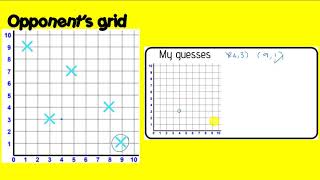
Students must use ordered pairs (x, y) to place their ships and launch attacks. This requires them to understand that the first number represents the horizontal movement from the origin and the second number represents the vertical movement. This simple shift turns a leisure activity into a rigorous exercise in spatial reasoning.
Educational Benefits for Students
Using a coordinate plane for Battleship offers several key learning advantages:
- Ordered Pair Proficiency: Students learn that the order of numbers matters. A shot at (2, 5) is entirely different from a shot at (5, 2).
- Quadrant Identification: Depending on the complexity of the gameboard, teachers can introduce all four quadrants, requiring students to work with negative integers.
- Spatial Awareness: Placing ships of varying lengths (e.g., a destroyer covering three units) forces students to calculate distances and linear spans on a graph.
- Engagement: Gamification reduces "math anxiety," allowing students to make mistakes and correct them in a low-stakes, competitive environment.
How to Play: Rules and Setup
To implement this in a classroom or home setting, follow these basic guidelines:
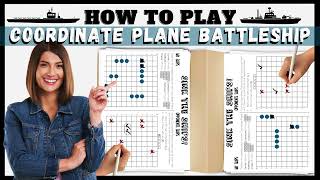
- Setup: Each player receives two grids. One grid is for placing their own ships (the "Home" board), and the other is for tracking shots fired at the opponent (the "Target" board).
- Ship Placement: Players place their ships on the coordinate plane. Ships must be placed along the grid lines and cannot be placed diagonally. Each ship occupies a specific set of coordinates.
- Taking Turns: Players take turns calling out an ordered pair, such as "I fire at (-3, 4)!"
- The Result: The opponent responds with "Hit" if a ship occupies that coordinate or "Miss" if the coordinate is empty.
- Winning the Game: The first player to successfully plot and "sink" all of the opponent's ships wins.
Tips for Math Teachers
For educators looking to integrate this into their curriculum, consider these strategies to maximize learning:
Scaffold the Difficulty: Start with the first quadrant only (positive numbers) for beginners. Once students are comfortable, expand the game to include all four quadrants to practice negative coordinates.
Require Written Logs: Instead of just calling out coordinates, have students maintain a written log of every "shot" fired. This reinforces the habit of writing ordered pairs correctly with parentheses and commas.
Digital Integration: While printable gameboards are excellent for tactile learning, digital tools can provide instant feedback. For those looking for an interactive experience, you can PLAY NOW! using the Master Cartesian tool on GeoGebra to visualize coordinates in real-time.
Conclusion
The Battleship Game Coordinate Plane is more than just a classroom break; it is a strategic way to bridge the gap between abstract coordinates and practical