Enhancing Math Lessons with Base 10 Block Clipart
Teaching foundational mathematics requires a blend of abstract concepts and concrete visuals. For elementary educators and parents, Base 10 Block Clipart serves as an essential bridge, allowing students to visualize number values and place value operations without needing physical manipulatives for every single exercise. Whether creating worksheets, digital presentations, or interactive online lessons, high-quality clipart helps students grasp how numbers are constructed.
What are Base 10 Blocks?
Base 10 blocks, also known as Dienes blocks, are proportional manipulatives used to teach the decimal system. They represent the base-10 nature of our counting system through four primary shapes:
- Units (Cubes): Representing 1 (the ones place).
- Rods (Longs): Representing 10 (the tens place).
- Flats (Squares): Representing 100 (the hundreds place).
- Cubes (Blocks): Representing 1,000 (the thousands place).
By using clipart versions of these shapes, teachers can quickly illustrate mathematical concepts on a whiteboard or in a printed handout, making the learning process more efficient and visually engaging.
Using Clipart to Teach Place Value
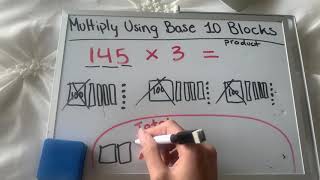
One of the most common challenges for young learners is understanding that a digit's value depends on its position. Clipart allows educators to create "build-a-number" activities. For example, if a student needs to represent the number 145, a teacher can use clipart to show:
- 1 Flat (100)
- 4 Rods (40)
- 5 Units (5)
Seeing 145 broken down into these visual components helps students move away from rote memorization and toward a conceptual understanding of hundreds, tens, and ones.
Applying Visuals to Complex Operations
Base 10 block clipart is not just for simple counting; it is highly effective for teaching complex arithmetic operations.
Adding Decimals with Visuals
When introducing decimals, the value of the blocks shifts. In this context, the "Flat" might represent one whole, the "Rod" represents a tenth (0.1), and the "Unit" represents a hundredth (0.01). Using clipart to demonstrate adding decimals allows students to see the "regrouping" process. When ten rods are combined, they visually merge into one flat, reinforcing the logic behind carrying over numbers in addition.
Dividing with Base 10 Blocks
Division can be an intimidating concept for elementary students. However, using visual blocks simplifies the process into "fair sharing." By using clipart, a teacher can show a large number—such as 120—and visually divide the flats and rods into equal groups. This step-by-step visual decomposition makes the abstract process of division tangible and easier to follow.
Benefits of Digital Clipart over Physical Blocks
While physical manipulatives are invaluable, digital clipart offers several distinct advantages for modern classrooms:
- Scalability: Teachers can enlarge a single unit block to fill a screen, making it easier for a whole class to see during a presentation.
- Efficiency: Creating a digital worksheet with pre-placed blocks is faster than managing hundreds of small plastic cubes in a classroom setting.
- Accessibility: Students working from home can access the same visual aids through PDFs or interactive slides, ensuring consistency in instruction.
- Cleanliness: Digital blocks don't get lost, broken, or scattered across the floor.
Tips for Finding the Best Base 10 Block Clipart
When searching for assets to use in your curriculum, keep these factors in mind to ensure the highest educational value:
Color Coding: Ensure