Asiwaju Bola Ahmed Tinubu: A Journey from Lagos Streets to the National Stage
Asiwaju Bola Ahmed Tinubu has become a household name in Nigeria, synonymous with political strategy, reform, and resilience. From his early years and rise in Nigerian politics to becoming one of the country’s most influential political figures, Tinubu’s story reflects both personal ambition and the evolving dynamics of a nation seeking stable governance.
Early Life and Academic Foundations
Born on 29 March 1952 in Lagos State, Tinubu grew up in a modest family that valued education. He attended children’s schools in Lagos before moving to the United States for higher studies. At Chicago State University, he earned a Bachelor of Science degree in Accounting, a qualification that later informed his reputation for fiscal prudence and systematic planning.
While in Chicago, Tinubu was exposed to democratic ideals and community activism. These experiences planted the seeds of a political consciousness that would later drive his involvement in Nigeria’s pro‑democracy movements during the 1990s.
Entry into Nigerian Politics
Returning to Nigeria in the early 1990s, Tinubu joined the National Democratic Coalition (NADECO), a group that championed the restoration of civilian rule after years of military dominance. His organizational skills and ability to mobilise grassroots support quickly earned him recognition among opposition leaders.
When the military regime finally yielded to democratic elections in 1999, Tinubu seized the opportunity to contest the governorship of Lagos State under the Alliance for Democracy (AD). His victory marked the beginning of a new political era for the state.
Governor of Lagos State: The “Lagos Model”
As the first civilian governor of Lagos State in the Fourth Republic, Tinubu embarked on an ambitious reform agenda. Key achievements included:
- Revenue Mobilisation: Introduction of the Lagos State Internal Revenue Service (LIRS), which dramatically increased internally generated revenue.
- Infrastructure Development: Expansion of road networks, revitalisation of the Lagos Bus Rapid Transit (BRT) system, and upgrades to the Lagos–Ibadan Expressway.
- Urban Planning: Implementation of the “Lagos State Urban Renewal Programme,” aimed at slum upgrading and improved waste management.
- Education and Health: Construction of new primary schools and primary health centres, coupled with scholarship schemes for under‑privileged students.
These reforms earned Tinubu the moniker “The Capable BAT,” a nickname that resurfaced during his later presidential screening.
National Influence and the Birth of the APC
After serving two terms as governor (1999‑2007), Tinubu turned his attention to national politics. Recognising the fragmentation of opposition parties, he played a pivotal role in merging the Action Congress (AC), the All Nigeria Peoples Party (ANPP), and the Congress for Progressive Change (CPC) to form the All Progressives Congress (APC) in 2013.
The APC’s successful 2015 presidential campaign, which unseated the incumbent party for the first time in Nigeria’s democratic history, cemented Tinubu’s reputation as a master strategist. His influence extended beyond party structures; he became a mentor to a generation of politicians who credit him for their political grooming.
Presidential Screening and the #TheCapableBAT Narrative
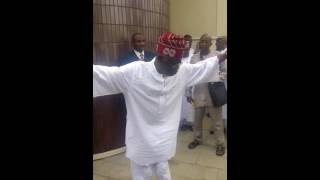
When Tinubu announced his presidential ambition, the nation’s attention turned to the screening process. Excerpts of Asiwaju Bola Ahmed Tinubu during his Presidential Screening, widely shared under the hashtag #TheCapableBAT, highlighted his focus on:
- Economic diversification and job creation.
- Strengthening anti‑corruption institutions.
- Improving security through community‑based policing.
- Investing in education and health to raise human capital.
His speech today, delivered at a rally in Abuja, reiterated these priorities, emphasising “a Nigeria where every citizen can thrive, regardless of geography or background.”
Recent Celebrations: Abeokuta Reception and Party Endorsements
Following his successful election, Tinubu was welcomed in Abeokuta with the rallying cry #bolatinubu #abeokuta. The event featured a vibrant speech that blended gratitude with a forward‑looking agenda. GOV. SANWOOLU AND ALL OTHER APC OFFICIALS WELCOME the new president, underscoring party unity.
Social media erupted with congratulatory messages, including “Congratulations to our new President Asiwaju Bola Ahmed Tinubu #apc #tinubu #jagaban.” The outpouring of support reflected both party loyalty and public optimism.
Encomiums at 66: A Milestone of Respect
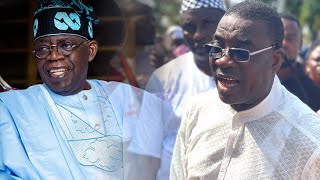
As Tinubu turned 66, a wave of encomiums poured in from across the political spectrum. Leaders, civil society groups, and ordinary citizens praised his perseverance, strategic mind, and contributions to Nigeria’s democratic consolidation. While critics continue to scrutinise his political methods, the consensus acknowledges his undeniable impact on the nation’s trajectory.
Legacy and Future Outlook
Assessing Tinubu’s legacy requires balancing achievements with ongoing challenges. His governance model in Lagos set a benchmark for revenue generation and urban management, influencing other states to adopt similar reforms. At the national level, his role in forging the APC reshaped party politics and demonstrated the power of coalition‑building.
Looking ahead, Tinubu’s presidency promises to focus on:
- Economic reforms aimed at reducing dependence on oil.
- Infrastructure projects that connect the North and South.
- Strengthening democratic institutions to ensure transparent elections.
- Expanding social safety nets for vulnerable populations.
Whether these ambitions will translate into tangible outcomes remains to be seen, but the foundation he has laid—both as a governor and as a national strategist—offers a solid platform for policy implementation.
Conclusion
From a young Lagosian with a dream of education to the President of Nigeria, Asiwaju Bola Ahmed Tinubu embodies a complex blend of vision, pragmatism, and political acumen. His journey illustrates how personal determination, combined with strategic alliances, can reshape a nation’s political landscape. As Nigeria navigates economic, security, and social challenges, the world will watch closely to see how Tinubu’s leadership will influence the country’s next chapter.