Mastering Flow: The Essential Guide to Anchor Chart Transition Words
Effective writing relies on more than just strong vocabulary and correct grammar; it requires seamless connections between ideas. For students and writers alike, the challenge often lies in moving from one thought to the next without sounding repetitive or disjointed. This is where the power of an anchor chart for transition words becomes invaluable. By visualizing how different phrases function, writers can elevate their work from a collection of sentences to a cohesive, professional narrative.
Why Use Anchor Charts for Transition Words?
An anchor chart is a visual tool that serves as a permanent reference point in a classroom or writing space. When students are in the middle of a drafting session, they may struggle to find the right word to signal a shift in logic. An anchor chart provides immediate, accessible support. Instead of relying on generic connectors like "and" or "then," writers can glance at the wall to find more precise alternatives that improve their flow.
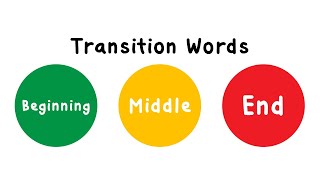
For those preparing for standardized exams, such as the ACT English section, mastering transitions is a critical skill. The test is filled with questions that require students to identify the most logical bridge between two clauses. By internalizing the categories of transitions, students can approach these questions with confidence rather than guesswork.
Categorizing Transitions for Better Writing
To make an anchor chart effective, it is best to organize transition words by their specific purpose. When writers understand the "job" a word performs, they are more likely to use it correctly. Here are the most useful categories to include on your reference guide:
1. Adding Information
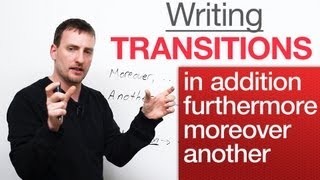
These words help the writer include additional details or support existing points. They prevent the writing from feeling fragmented. Common examples include:
- Furthermore
- In addition
- Moreover
- Likewise
- Additionally
2. Showing Contrast
When an argument shifts or a counterpoint is introduced, contrast transitions are essential. They signal to the reader that a change in perspective is occurring. Use words such as:
- However
- On the other hand
- Nevertheless
- Conversely
- Despite this
3. Indicating Cause and Effect
These transitions clarify the relationship between an action and its outcome. They are vital for analytical writing and logical arguments. Key choices include:
- Consequently
- Therefore
- As a result
- Thus
- Accordingly
4. Sequencing and Time
For narrative essays or step-by-step instructions, sequencing words keep the reader grounded in the timeline of events. Examples include:
- Subsequently
- Meanwhile
- Initially
- Finally
- In the meantime
How to Implement These Tools in Your Writing
If you want to learn how to use these tools effectively, start by incorporating them into your daily editing process. Many writers find that their first draft is "transition-poor." During the revision stage, look at the start of every paragraph and major sentence. Ask yourself: Does this sentence logically connect to the one before it? If not, consult your anchor chart to select a word that provides the necessary bridge.
Coach Write, a popular resource for young writers, emphasizes that incorporating these words is a fundamental step toward maturity in writing. By moving beyond basic conjunctions, students demonstrate a higher level of control over their structure and tone. Whether you are crafting a persuasive essay or a creative story, the right transition can change the entire rhythm of the piece.
Refining Your Final Draft
Once you have integrated transition words into your writing, the next step is ensuring they are used with precision. Overusing transitions can sometimes make writing feel forced. The goal is to use them only when they serve a purpose in clarifying the relationship between ideas. After completing a draft, read your work aloud. If a transition word feels clunky or unnecessary, remove it or swap it for a







![ACT Transition Words [ACT English Section Vocabulary]](https://i.ytimg.com/vi/tgWVKWvNMXI/mqdefault.jpg)