Mastering 3-Digit Subtraction Without Borrowing
Mathematics is a foundational skill that builds upon simple concepts to reach complex problem-solving abilities. Among the essential early math skills, 3-digit subtraction without borrowing serves as a critical stepping stone for students. By mastering this process, learners gain confidence in their numerical fluency and prepare themselves for more advanced arithmetic, such as regrouping and multi-digit multiplication.
Understanding the Basics of 3-Digit Subtraction
Subtraction is the process of finding the difference between two numbers. When we talk about 3-digit subtraction, we are dealing with numbers that occupy the hundreds, tens, and ones places. The term "without borrowing"—often referred to as subtraction without regrouping—means that each digit in the top number (the minuend) is greater than or equal to the corresponding digit in the bottom number (the subtrahend).
Because no regrouping is required, these problems are straightforward and provide an excellent way for students to practice column alignment and place value concepts. Understanding how to organize numbers by their place value is the first step toward accuracy.
Step-by-Step Guide to Solving Problems
To successfully solve 3-digit subtraction problems, following a consistent method is key. Students should always work from right to left, starting with the smallest place value.
- Align the numbers: Ensure that the ones are in the ones column, the tens are in the tens column, and the hundreds are in the hundreds column. Proper alignment prevents common errors.
- Subtract the ones column: Take the bottom digit from the top digit in the far-right column. Write the result directly below the line.
- Subtract the tens column: Move to the middle column and repeat the process.
- Subtract the hundreds column: Finally, subtract the digits in the far-left column to complete the calculation.
For example, if you are subtracting 231 from 567, you subtract 1 from 7, 3 from 6, and 2 from 5. The result is 336. Since every top digit is larger than the bottom digit, the process remains simple and efficient.
Why Place Value Matters
The success of 3-digit subtraction relies heavily on a firm grasp of place value. Every digit in a number has a specific value based on its position. In the number 485, the 4 represents 400, the 8 represents 80, and the 5 represents 5. When students visualize these numbers as expanded forms, the subtraction process becomes much more intuitive. Recognizing that you are subtracting hundreds from hundreds and tens from tens helps students avoid mixing up columns.
Tips for Building Confidence and Speed
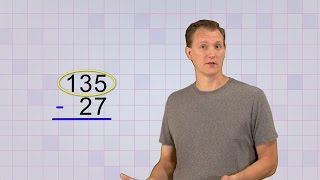
For students, consistency is the most important factor in improving math skills. Engaging with high-quality lesson materials can make the process more enjoyable. Resources like Underwater Math provide engaging learning solutions that turn standard practice into an interactive experience, helping students visualize the math behind the numbers. Similarly, visual learners often benefit from platforms like Math Antics, which offer structured video tutorials to clarify these fundamental concepts.
To reinforce learning, consider these strategies:
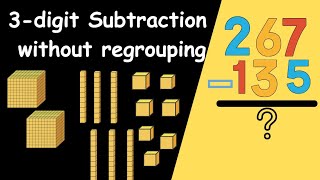
- Use Manipulatives: Base-ten blocks are excellent tools for physical representation of hundreds, tens, and ones.
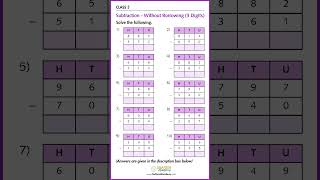
- Practice with Worksheets: Using worksheets specifically designed for 3-digit subtraction without borrowing allows students to drill the format until it becomes second nature.
- Check Your Work: Encourage students to perform the inverse operation. By adding the result to the subtrahend, they should arrive back at the original minuend. This simple habit builds self-correction skills.
Preparing for Advanced Concepts
Once a student can reliably solve 3-digit subtraction without borrowing, they are ready to tackle more complex challenges. The transition to subtraction with borrowing (regrouping) is the natural