Understanding 3 Addends in Elementary Mathematics
When students first encounter addition, they often work with two numbers. However, mastering 3 addends is a crucial step toward fluency with larger sums and multi‑digit problems. Adding three numbers at once helps children develop mental‑math strategies, improve number sense, and prepare for more complex operations such as column addition and algebraic expressions.
Why Teach 3 Addends Early?
Introducing three addends in the early grades supports several learning goals:
- Conceptual depth: Learners see that addition is associative, meaning the order of grouping does not change the total.
- Problem‑solving flexibility: Children can break down word problems into three parts, making real‑world scenarios easier to model.
- Preparation for higher standards: Standards such as 1.OA.2 require students to add within 20 using multiple addends, so early practice builds confidence.
Core Concepts for Teachers
Definition and Notation
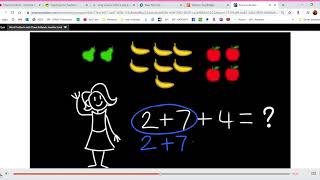
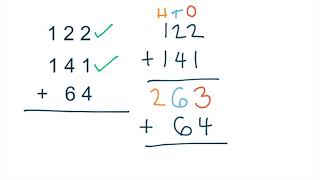
In mathematics, an addend is a number that is added to another. When you have three addends, the expression looks like a + b + c = total. Emphasize that each addend contributes equally to the final sum.
Associative Property
Show students that (a + b) + c = a + (b + c). Using manipulatives, such as counters or number lines, helps them visualize how regrouping does not affect the answer.
Commutative Property
Remind learners that the order of addends can change without altering the total: a + b + c = c + a + b. This property is especially useful when looking for “friendly” numbers that make mental addition easier (e.g., 7 + 8 + 5 → 7 + 5 + 8 = 12 + 8 = 20).
Effective Teaching Strategies
Below are proven methods for guiding students through the concept of three addends.
- Concrete‑Pictorial‑Abstract (CPA) Sequence
- Concrete: Use physical objects (blocks, beans) to form three groups and combine them.
- Pictorial: Draw pictures or use ten‑frames to represent each addend.
- Abstract: Write the numerical expression and solve it.
- Number Line Jumps
Place three points on a number line, have students “jump” from the start to the first addend, then to the second, and finally to the third. This visual reinforces the additive process.
- Story Problems
Connect math to everyday life. For example, “You have 4 red apples,